
What choices do you have at your GP practice?
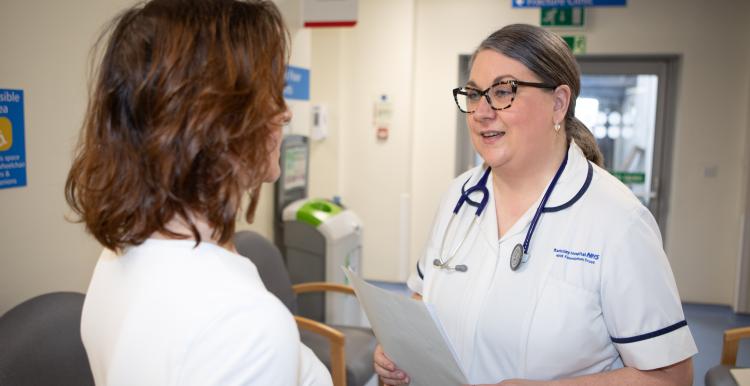
We've published new research showing that there are significant gaps between the choices patients want when booking a GP appointment and the ones they are offered. But what choices should you get at your GP practice?
""

You are entitled to certain choices when booking GP appointments. These have different levels of status. Some relate to rights patients are entitled to under legislation, while others are not legal rights but are recommended under guidelines or policy. Perhaps most prominently, the NHS Constitution includes the right to ask for a particular doctor.

The National Institute for Health and Care Excellence (NICE) clinical guideline on Patient experience in adult NHS services, which applies to GP and other NHS consultations, says that services should "adopt an individualised approach to healthcare services.”

This means services should consider “people’s ability to access services, personal preferences and coexisting conditions". Whilst NICE guidelines are not legal rights, in practice, they are seen as advice that medical professionals should follow. 

The NHS GP contract also includes choices that you should be offered. 

What choices do you currently have?

We have listed the choices you currently have when you use GP services. 

1. Method of booking a GP appointment

You can choose how you want to book your appointment with a GP, be it over the phone, online (including via the NHS App) or face-to-face. This right is in the GP contract.

2. Named healthcare professional

NHS constitution (from NHS Act 2006): "You have the right to express a preference for using a particular doctor preference for using a particular doctor within your GP practice, and for the practice to try to comply."

This means that however you book your appointment, you can ask for a particular doctor. This request may not always be granted, but the constitution says the practice should "try to comply".

3. Male or female professional

As the NHS constitution includes the right to ask for a named professional, you can ask for a male or female professional. This type of request is likely to be granted, although there may be a delay.

Practices' ability to meet this request will depend on their workforce make-up and also whether the surgery believes your symptoms are so urgent you should see any available doctor.

4. Type of professional

Under the NHS constitution, you can ask for a certain GP but not necessarily another type of professional or to see a GP instead of another professional.

5. Longer appointment

Under the Equality Act, you have the right to ask for a longer appointment if it's a reasonable adjustment required to meet the needs of a disabled person'.

However, it's up to GP surgeries to decide how to implement reasonable adjustments. You may only be able to get it on the telephone or in person.

6. Companion at appointments

You can bring a family member, friend or advocate along to a GP appointment. This best practice recommendation is in the NICE Patient Experience guideline. You shouldn’t need to ask for permission to do this.

Under many local guidelines, people can also request another NHS member comes into an appointment as a chaperone, such as asking a female member of staff come in if a male GP undertakes an intimate examination of a female patient.

7. Accessibility adjustment

Under the Accessible Information Standard and the Equality Act, you can ask for communication support, such as a British Sign Language interpreter. You also have the right to receive healthcare in an accessible format, such as electronic, Braille, easy read, large print, and others.

A new NHS system called the Reasonable Adjustment Digital Flag allows health professionals to record your needs once and for them to be shared across the NHS. This should mean that if you tell a member of practice staff what your requirements are, this should be recorded and used in future in all appointments.
 

What you may not be able to choose

Type of appointment 

The GP contract says that practices should offer appointments taking into account "where appropriate, the preferences of the patient". This means you can request whether you would prefer a face-to-face or remote appointment, though the final decision rests with the GP team based on what they consider appropriate for your needs.

Read our recommendations to help people get the choices they want

The “choice gap”: do patients get the choices they want from GP care?

Our new research shows how important choice is to people when it comes to their care, and makes recommendations to help ensure they get those choices.

What choices do patients want when they book GP appointments? And are they getting those choices?

Read the full report

Sarah - Chair of the Board of Trustees

image of Sarah, the Chair of the Board of Trustees

As the Chair of the board of trustees, I work with the other trustees and staff to help set the strategic direction of Healthwatch Bradford and District. We meet regularly to look at finance reports, agree the budget, get updates on the work of the staff team and make any decisions that are important to ensure the charity is as strong and effective as possible. We also work closely with the senior staff team to make sure they have the support they need. I previously managed Healthwatch Bradford and District, and I’m passionate about ensuring our local community has a strong voice in the local NHS. I know from personal experience, as both a patient and a carer, that the NHS can be confusing and it can be hard to have your voice heard. We are a diverse and brilliant community, and it’s vital that every part of it has the chance to speak up and help shape our care.

Outside of my role, I’ve got two young children so I’m often busy with them, but I also love yoga and walking in the woods and moors around the District.

I think Healthwatch Bradford and District does a vital job hearing from people across the District, sharing their experiences and views with the NHS, and helping the health and care system better understand the community. I love that I can support this, and I really enjoy getting to work with the fantastic team.


Emma - member of the Board of Trustees

Emma - member of the board of Director

"Healthwatch Bradford and District plays a vital role in making sure every person’s voice is valued, respected, and used to drive meaningful change across our local health and care systems."

I’ve always been driven by a deep belief that people deserve to be heard when it comes to their health, wellbeing, and social care. That belief has shaped my entire career and I’ve spent my life working across health and social care. I have spent time in emergency departments, on hospital wards, within social care services, and alongside community groups where I’ve witnessed extraordinary dedication across our system, but I’ve also seen where things fall short. Those experiences have strengthened my conviction that listening to people’s real stories is the key to creating better, fairer, and more responsive services.

As a Trustee of Healthwatch Bradford and District, I’m proud to help ensure that this principle sits at the heart of everything we do. My role involves supporting the leadership team with strategic decisions, guiding our communications, and helping to shape the organisation’s public presence so that the Bradford and district community knows we are here to champion what matters to them.

Outside of work, life is full and joyful. I have a large, lively family, I foster dogs (which brings chaos and love into the house), and I find calm and creativity through crochet.


Jo - member of the Board of Trustees

image of Jo

“I’m committed to making sure every voice, especially those often overlooked, shapes the future of our local health and care services.”

Alongside my work as an Aviation Ops Co‑ordinator, I serve as a trustee where my role is to read, question, and challenge. I bring real‑life experience into board decisions, always trying to make sure services and strategies work for the people they’re meant to help. Because I commute between cities for my job, I get to see how health services operate in different parts of the country. That wider perspective really influences my understanding of services, especially when I see how differently things can be done in other areas of the UK.

I have a particular interest in children’s services, the elderly, and vulnerable communities as I feel these people have seldom heard voices and need to be supported within healthcare services. As a Healthwatch board member, I champion the voice of local people in health and social care. I use lived experience, community insight, and independent challenge to influence decisions, improve services, and ensure people are heard. I’m driven by a belief that everyone deserves safe, fair, and accessible care, and that real change happens when the public voice is at the table and taken seriously.

I’m also currently studying a diploma in Aesthetics. When I’m qualified, I hope to be able to help people with cleft palates or other facial issues or scarring. It’s important to me to support people who might otherwise struggle to access the help they need. I really agree with the sentiment that the health and care system works best when it truly listens to the people it serves.